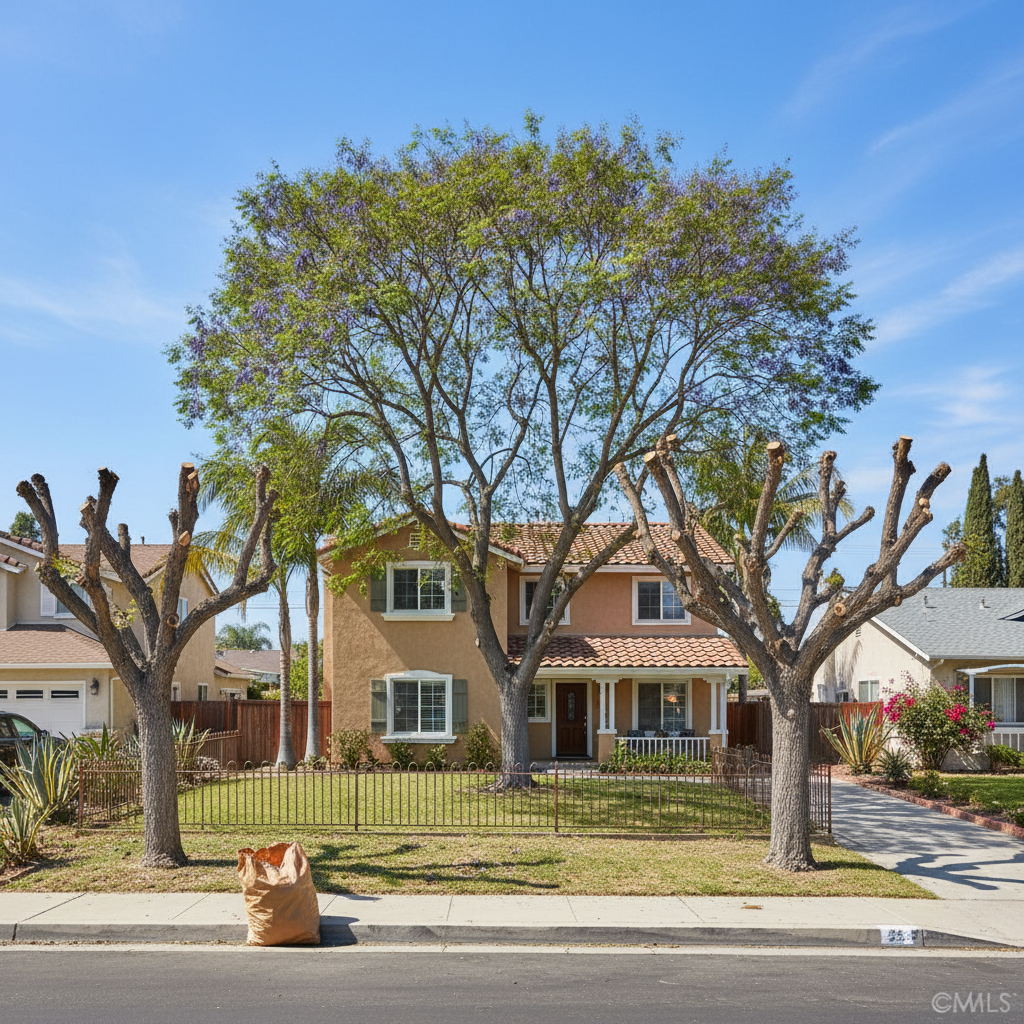
You ever look at a neighbor's tree and think, "Man, that thing needs a haircut"? Or maybe you're worried about that big branch hanging over your roof with the next Santa Ana wind coming through. Tree trimming isn't just about making things look neat; it's about safety, tree health, and protecting your property.
Here in Inglewood, we've got some specific things going on that make local expertise super important when it comes to tree care. It's not like trimming trees in, say, Seattle or even the Valley. Our climate, our soil, and even the types of trees folks plant around here all play a role.
Our Inglewood Trees & What They Need
We see a lot of the same tree species popping up all over Inglewood, from the older, established neighborhoods near Morningside Park to the newer developments closer to the Stadium. Things like:
- Eucalyptus: These guys grow fast and can get huge. They're notorious for dropping branches, especially after a dry spell followed by some wind. Regular thinning is key to manage their size and reduce risk.
- Ficus: Beautiful, dense canopies, but their roots can be a nightmare if not managed. Trimming their tops helps keep their root growth in check and prevents them from getting too top-heavy.
- Palms: Everyone loves a palm tree, but those dead fronds don't just fall off neatly. They need to be removed for aesthetics and safety, especially if they're over a walkway or driveway.
- Sycamores: We've got some grand old Sycamores around here. They need careful structural pruning to maintain their shape and prevent weak limbs from becoming hazards.
Each of these has its own quirks, its own growth patterns, and its own best practices for trimming. You can't just go at a Eucalyptus like you would a Ficus. A good local arborist knows these differences inside and out.
Why Local Conditions Matter So Much
It's not just the tree types; it's our environment too. We get long dry spells, then sometimes a sudden, heavy rain. We get those fierce Santa Ana winds that can really put stress on trees, especially if they haven't been properly maintained. I've seen countless branches come down during those wind events, and often, it's from trees that were neglected or improperly trimmed.
Our soil can be pretty dense clay in some areas, which affects how roots grow and how stable a tree is. In other spots, especially closer to the coast, it might be sandier. This all impacts how a tree establishes itself and how it reacts to pruning. Someone who's been working in Inglewood for years, like us at Oasis Tree, understands these nuances. We know what to look for, what problems are common here, and how to address them effectively.
Common Trimming Projects We Tackle
What kind of stuff do we usually get called out for? A lot of it falls into a few categories:
- Hazard Reduction: This is probably the biggest one. People worried about dead or weak branches falling on their house, car, or even worse, a person. We're talking about removing limbs that are rubbing, crossing, or showing signs of decay.
- Clearance Pruning: Keeping branches away from your roof, power lines, and sidewalks. You don't want a branch scraping your shingles or blocking the path for pedestrians. Plus, the city has rules about sidewalk clearance, and you don't want a citation.
- Thinning & Shaping: Sometimes a tree just gets too dense. Thinning out the canopy improves air circulation, lets more light through, and reduces wind resistance. Shaping is about maintaining the tree's natural form and making it look good without 'topping' it, which is almost always a bad idea.
- Fruit Tree Pruning: If you've got citrus or other fruit trees, proper pruning is essential for good fruit production and tree health. It's a different ballgame than trimming a shade tree.
What you don't want is some out-of-town crew showing up, not knowing a thing about our local conditions, and just hacking away. They might do more harm than good, leaving your trees vulnerable to disease or structural failure down the line. We've seen it happen.
So, next time you're thinking about your trees, remember that local knowledge isn't just a nice-to-have, it's essential. It means your trees get the right care for our specific Inglewood environment, keeping them healthy, beautiful, and safe for years to come.